
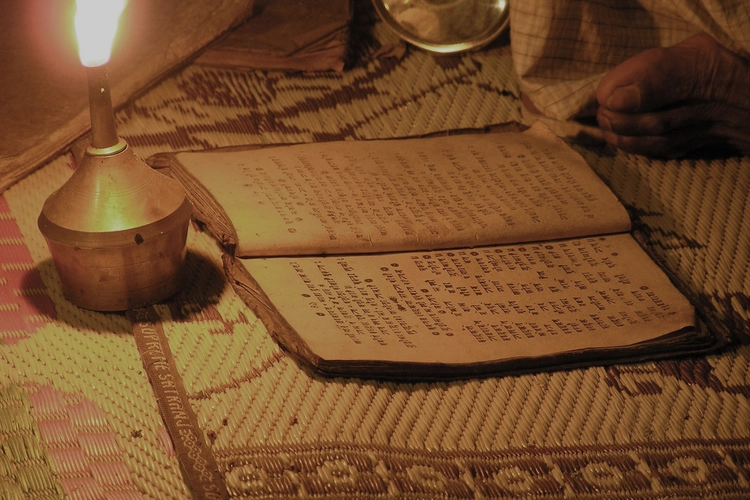
Puthis
Sylhet has a rich heritage of literature in the Siloṭi Nagri script going back at least 200 years. Books in Siloṭi Nagri, whether manuscript or printed, are known as puthis. This literature has been largely unknown and neglected since Sylhet’s incorporation from Assam into East Pakistan (now Bangladesh) in 1947, and is only recently being rediscovered.
Puthis were written as poetry, not prose, consisting of long narrative sections called boyans, composed in the poyar metre (pairs of rhyming lines each with 14 beats), interspersed with songs in the tripodi metre (pairs of lines each divided into 3 feet) or ragas (shorter songs in a Bengali folk or classical Indian style). Many Sylhetis even today are able to read from memory large sections of the most popular puthis. At one time there was hardly a household in Sylhet that did not own printed versions of one or another of these puthis.
The purpose of the literature was to give moral and Islamic instruction to the people and never just to entertain. Some puthis were written by Sufi pirs (spiritual leaders) to instruct their disciples, others were written or printed for a much wider audience.
We've included sample pages from four puthis below. Click on the image to see a full-size photo, transcription of the text into Siloṭi Nagri, Bengali and Latin scripts, as well as an English translation.
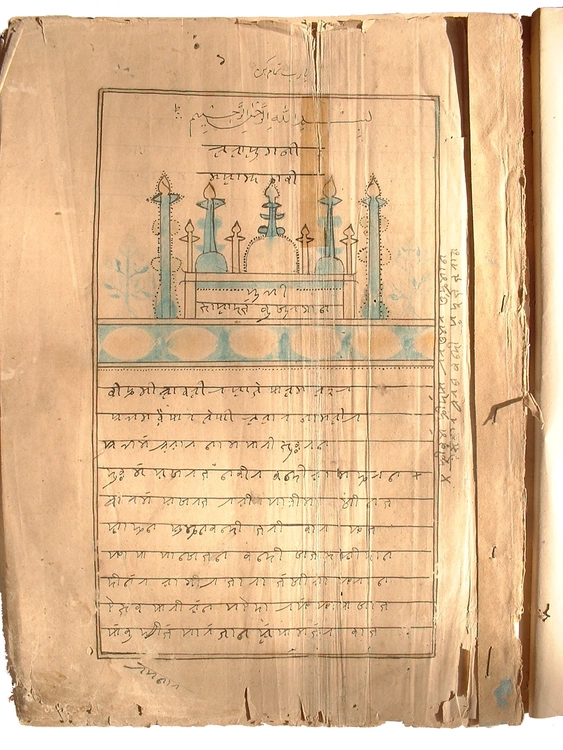
Shahadote Buzurgan by Pir Mozir Uddin Ahmed (1863-1933). Page 1.
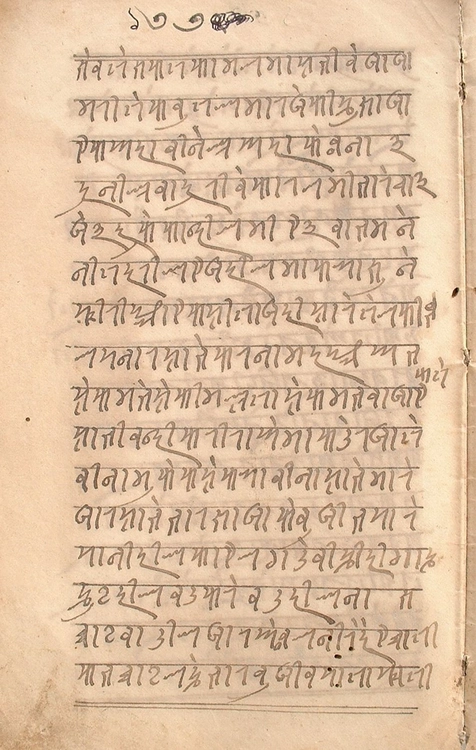
Gafil Nosihot by Pir Azmot Ali (born ca. 1793). Page 33.
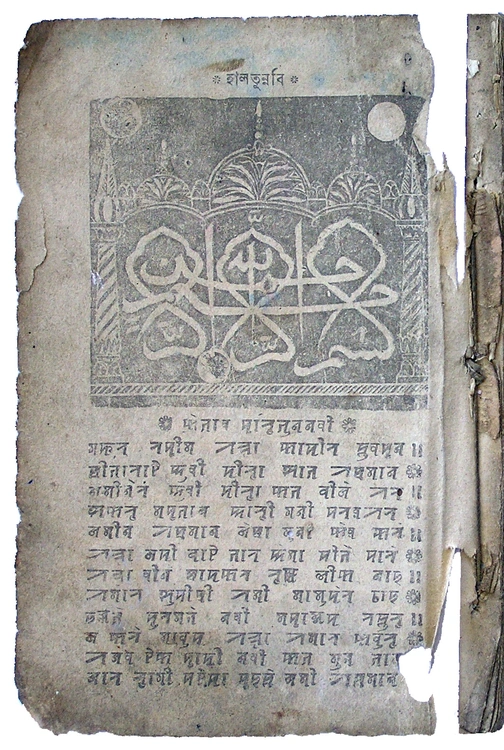
Halot-un-Nobi by Sadeq Ali (born 1800 CE). Page 1.
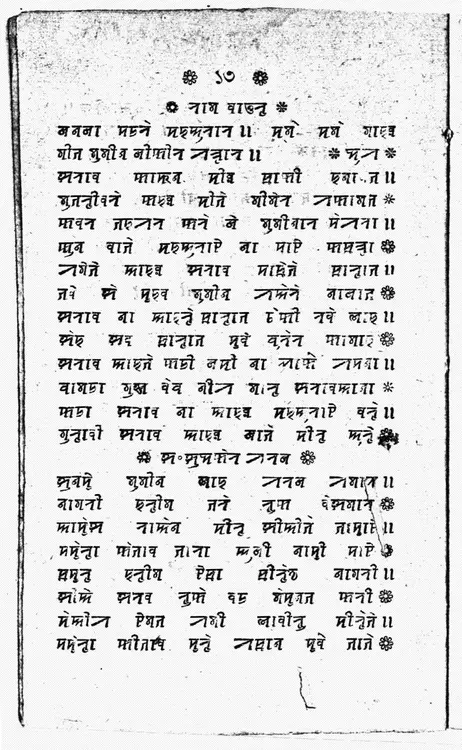
Pohela Kitab o Doikhurar Rag (1336 BS; 930 CE) by Md Abdul Lotif (Pohela Kitab) and Munshi Mobbin Uddin (Doikhurar Rag). Page 13.
The samples above show pages from two manuscript and two printed puthis. As seen in the first and third examples, the initial page of a puthi is often beautifully decorated with an Islamic design and some Arabic calligraphy, followed by an opening section consisting of a bondona, or poem in praise to God.
The rest of the puthi is also in verse, and is designed to be sung or chanted. The content can be a story, such Jongo Nama which tells the history of the war of Karbala and Mohobbot Nama which tells the story of Joseph and Zulaikha. Or it can be the teachings of a Sufi master or pir to his disciples, in the form of songs in the baula style each followed by an explanation in simple poyar metre. (For more information on puthi performance, including examples click here.)
Many manuscript puthis, as in the examples shown above, have no gaps between the words, which can make reading difficult for the modern reader.
Puthi Collections
The Sylhet District Gazetteer (1975) lists 44 works published in Siloṭi Nagri script, dating from the 15th century to 1930 AD.
STAR's collection
The following is a shortened list of the titles currently being studied by Sylheti Translation And Research:
- Halot-un-Nobi (Account of the Prophet) by Sadeq Ali (19thC); edition printed c.1920, 275 pages
- Mohobbot Nama - Yusuf Zulikha (The Love Story of Joseph and Zulaikha) adapted from the Persian of Jami (1475 CE) by Sadeq Ali (19thC); edition printed 1918, 95 pages
- Nur Poricoy (Introduction to Light) by Afzul Shah (undated); manuscript, 139 pages
- Nur Nosihot (Teachings of Light) by Syed Shahnur (1820 CE); manuscript, 420 pages
- Iuropio Mohajuddher Kobita (Vol.2) (Poems of the European Great War), collected by Sheikh Abdul Wahid al Adiri ol Hanofi (undated); printed c.1950, 16 pages
- Bhed Johur (Discernment of Excellence) by Pir Mozir Uddin Ahmed (1863-1933); manuscript, 130 pages
- Bhed Johur (later expanded version of same book); manuscript, 193 pages of 14 lines
- Puthi Sahadote Buzurgan (‘The Traditions of the Elders’) by Pir Mozir Uddin Ahmed; manuscript, 842 pages of 21 lines
- Sitalong Shaher Puthi, the collected songs of the Sufi Pir Sitalong Shah (1806-1899); manuscript, 604 pages
- Jongo Nama (Account of the War), the history of Hasan and Hussein and the massacre at Karbala, by Wahed Ali; printed, 460 pages
- Puthi Shohorchorit by Shah Asod Ali Pir (1813-1905); printed 1878, 104 pages
- Silet Nagri Pohela Kitab o Doikhurar Rag (A Sylhet Nagri Primer and Doikhura’s Songs) by Md Abdul Lotif, including songs by Munshi Mobin Uddin ‘Doikhura’; printed 1930, 14 pages
- Baula Dukhkhit (a Sad Baul Song), a collection of songs by Munshi Moshahed Ali; printed 1937, 15 pages
- Copies of several hundred diverse fragments of manuscripts collected from villages in Sylhet (C18th/19th?)
We are grateful to a number of people who have kindly loaned or allowed us to copy their original Siloṭi Nagri materials.
Additional collections
A digitised collection of 103 Siloṭi Nagri puthis is available to view online at the British Library's Endangered Archives, a collaborative archival project between the British Library and the School of Cultural Texts and Records, Jadavpur University, Kolkata.
